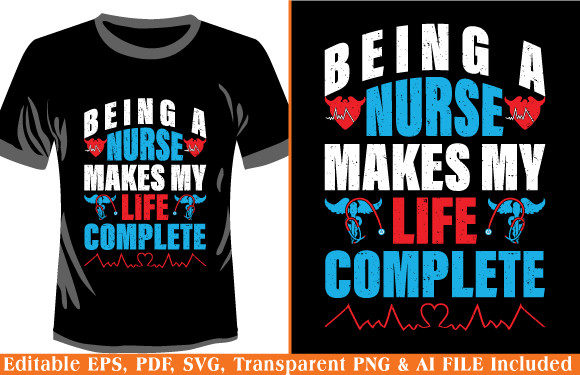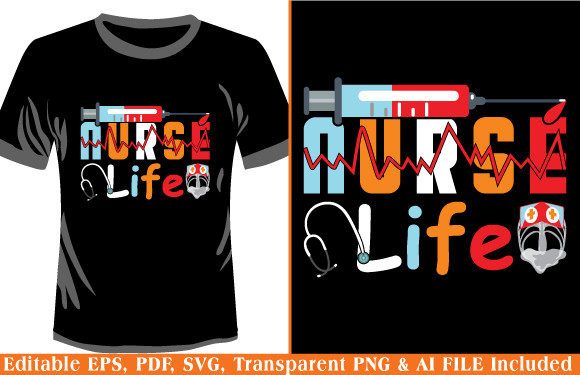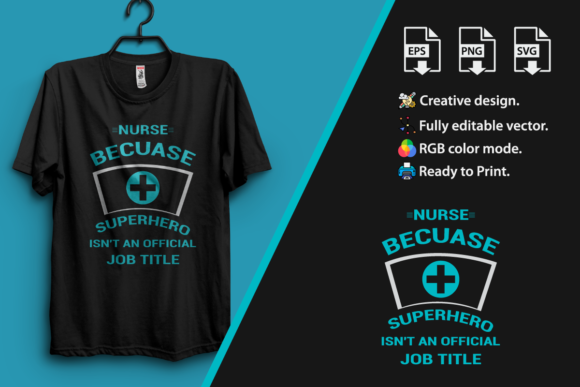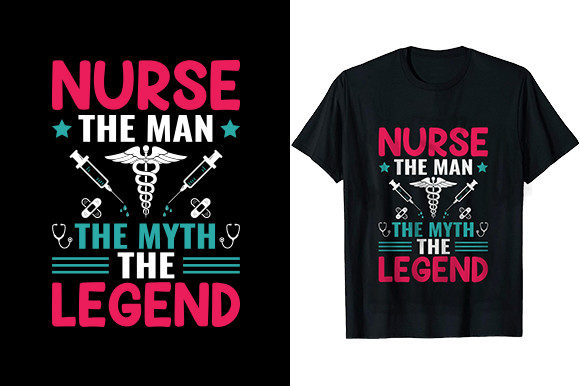
Nurse T-Shirt Design Vector: A Designer’s Review
As a designer who has spent years bridging the gap between digital art and physical thread, I approach every new T-Shirt Designs asset with a critical eye. It is not enough for a graphic to look good on a screen; it must survive the needle. Recently, I evaluated the Nurse T- Shirt Design Vector to determine its viability for real-world embroidery projects. This review focuses on how this specific set of Graphics translates from an Illustrator EPS file into a tangible, high-quality finished product.
First Impressions and Visual Personality
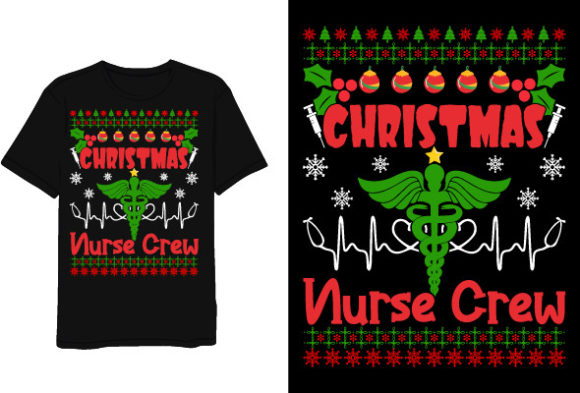
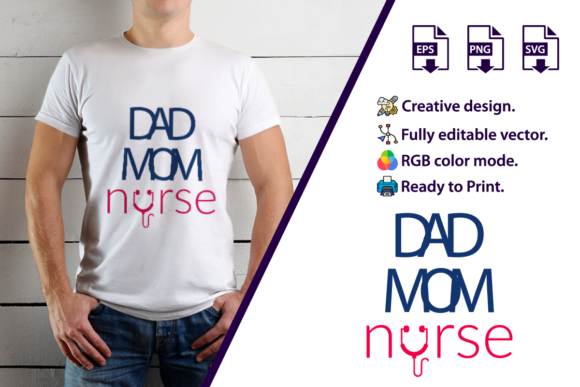
The first thing that strikes you about the Nurse T- Shirt Design Vector is its clean, confident layout. In the world of medical-themed apparel, designs often fall into two traps: they are either overly clinical and sterile, or cluttered with too many decorative elements that confuse the viewer. This design avoids both pitfalls. It carries a mood of professional pride mixed with approachable warmth, making it ideal for healthcare workers who want to express their identity without sacrificing professionalism.
Because the file is a fully editable vector, the lines are crisp and scalable. For an embroidery designer, this is crucial. When you zoom in to inspect the paths, you see closed shapes and smooth curves. This suggests that when converted into a machine embroidery design, the stitch paths will follow logical routes, minimizing jumps and thread breaks. The creative design elements are balanced, offering enough detail to be interesting but remaining open enough to allow the fabric texture to breathe.
Real-World Application: The Custom Scrub Cap Scenario
To truly test the potential of this asset, I imagined a specific real-life scenario: a small business owner creating custom scrub caps for a local hospital’s nursing staff. The goal was to create a personalized gift that boosts morale and team spirit. Using the Nurse T- Shirt Design Vector as the central motif, I visualized how it would sit on the curved surface of a cap.
In this context, the design’s simplicity becomes its strength. Complex applique design elements can sometimes bulk up thin cotton fabrics used in medical caps, causing discomfort. However, because this vector allows for easy customization of scale, I could adjust the size to fit a standard hoop without losing integrity. The closed paths ensure that if I choose to use a fill stitch for larger areas, the coverage will be even. If I opt for a satin stitch border, the edges will remain sharp against the fabric.
This versatility makes it suitable for more than just caps. Imagine this design embroidered on a high-quality tote bag for nurse graduates, or as a subtle chest emblem on a fleece jacket for winter shifts. The custom apparel market thrives on items that feel bespoke, and this vector provides the foundation for that premium look.
Technical Performance and Stitching Clarity
When working with any digital embroidery file, the transition from RGB color mode on screen to thread colors in hand is where mistakes happen. The Nurse T- Shirt Design Vector comes in RGB, which is standard for screen viewing, but as a reviewer, I must advise you to map these colors carefully to your thread chart. Since all paths are closed, digitizing this for embroidery should be straightforward. You won’t have to worry about open nodes causing stray stitches.
One of the key advantages here is the ability to change colors easily. In a craft business, you might need to adapt the design for different uniform colors. A white nurse’s tunic requires a different thread contrast than navy blue scrubs. Because the vector is fully editable in Illustrator CS6 or later, you can test various thread colors digitally before committing to the hoop. This saves time and reduces waste on expensive threads.
However, attention must be paid to stitch density. If you scale the design up significantly for a large tote bag design or a blanket, you may need to adjust the density settings in your digitizing software. High density on stretchy fabrics can cause puckering. Conversely, if you scale it down for a baby item, ensure the details don’t become so small that they merge into a blob of thread. Always check the legibility of any textual elements if included in the variation you choose.
Fabric Considerations and Hoop Constraints
Not every fabric behaves the same way. When using this design on textured fabrics like terry cloth towels or pique polo shirts, the running stitch outlines might get lost. In such cases, increasing the stroke width slightly in the vector stage before digitizing can help maintain visibility. For thin or stretchy fabrics, such as those used in baby embroidery or lightweight tees, a proper stabilizer is non-negotiable. I recommend a cut-away stabilizer for garments that will undergo frequent washing, ensuring the design remains flat and does not distort over time.
Curved surfaces present another challenge. If you are placing this on a cap or a sleeve, the geometry of the design matters. The Nurse T- Shirt Design Vector has a balanced composition that generally centers well, but always do a test run on scrap fabric. Check how the design sits in your specific hoop size. If the design is wider than your hoop, you may need to split it or reduce the scale, which is easy to do given the vector format.
Commercial Viability for Etsy Sellers and Makers
For Etsy sellers and small shop product creators, the value of a design lies in its marketability. Medical professionals are a loyal customer base who appreciate quality. A well-executed embroidery project using this vector can command a higher price point than a printed equivalent because of the perceived labor and durability. The handmade product appeal is strong here.
When creating listings, use high-quality printable mockup images to show the design on various items. Show it on a sweatshirt, a pillow cover, or an apron. This helps buyers visualize the finished product. Since the file is an Illustrator EPS, you can also create flat lay graphics for your social media marketing, maintaining brand consistency across your design assets.
It is vital to confirm licensing terms before selling. While the product description highlights ease of customization and commercial-ready features like 300 DPI resolution, always verify the specific license agreement provided by the seller. Ensure you are compliant when using this for commercial embroidery or selling digital derivatives.
Practical Designer Notes for Best Results
To get the most out of the Nurse T- Shirt Design Vector, follow these practical steps:
- Test on Scrap Fabric: Never stitch directly on your final garment. Test tension and density on a similar fabric scrap first.
- Check Contrast: View your color choices in black and white to ensure the design holds its shape without relying on color differences.
- Inspect Small Details: Zoom in on the vector paths. If any lines are too close together, adjust them to prevent thread buildup.
- Use Proper Stabilizer: Match your stabilizer to your fabric weight. Heavy fabrics may need less support, while knits require robust stabilization.
- Verify File Compatibility: Ensure your digitizing software can import EPS files smoothly, or convert them to a compatible format like SVG or DXF if necessary, keeping paths intact.
In conclusion, the Nurse T- Shirt Design Vector is a robust asset for any designer’s toolkit. It offers the flexibility needed for diverse embroidery project types, from holiday gifts to daily wear. By respecting the technical requirements of embroidery and leveraging the editable nature of the vector, you can create stunning, professional-grade items that resonate with customers. It is not just a graphic; it is a blueprint for quality craftsmanship.